
How to Clean Stainless Steel Sink Stains: I Tested 4 Methods
My stainless steel kitchen sink gets a workout. Between cooking, washing dishes, and everyday cleanup, it doesn’t take long for stubborn stains and discoloration to appear.
I clean my sink regularly with dish soap and warm water, but I’ve learned there’s a difference between everyday cleaning and deep cleaning. My usual routine takes care of grease and food residue, but it wasn’t removing the stubborn buildup that had accumulated over time.
I also have hard water from an artesian well, with enough iron to leave stains on my bathroom sink’s surface. Mineral deposits and hard water stains are familiar problems around my house.
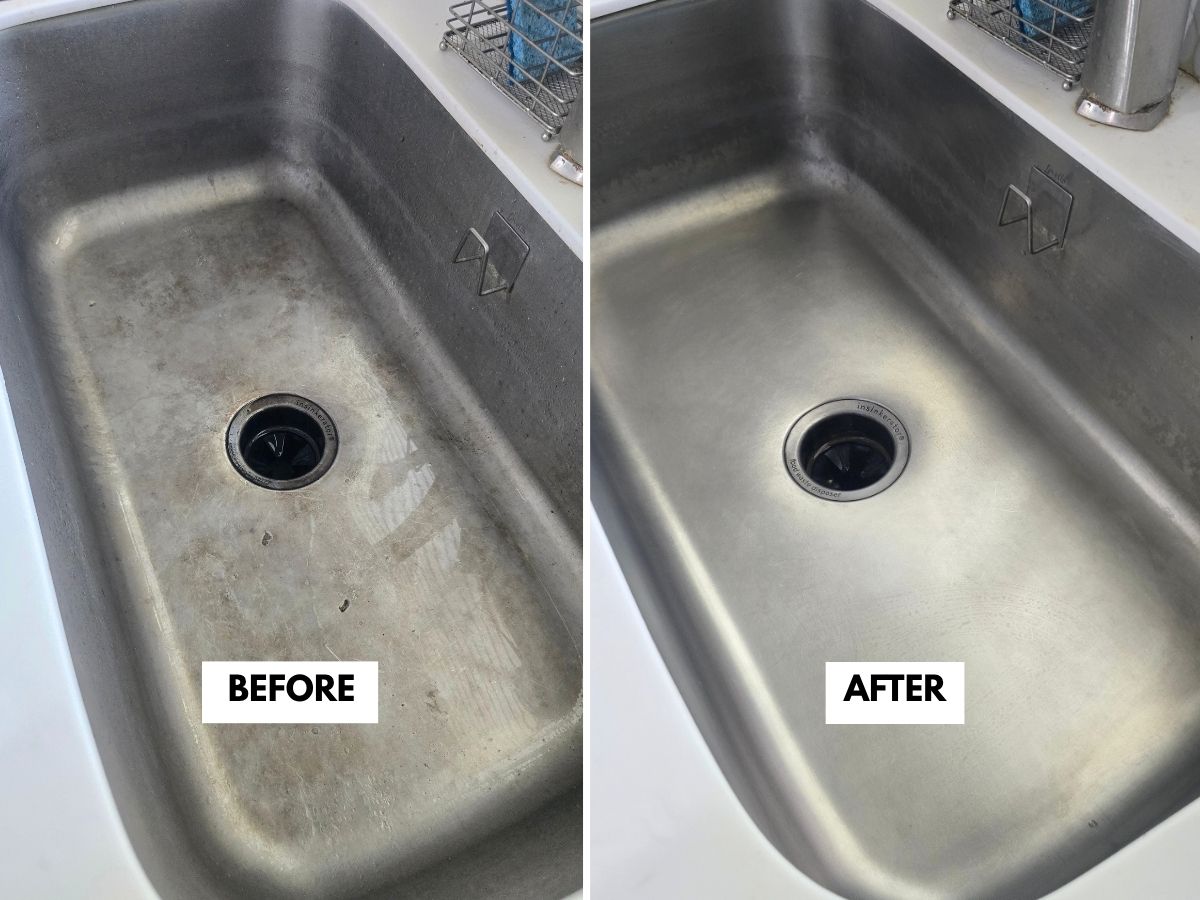
I wanted to learn how to clean stainless steel sink stains that wouldn’t budge with ordinary dish soap, so I divided my sink into four sections and tested four different cleaning methods.
The winner was Bar Keepers Friend. But even that took some elbow grease!
How to Clean Stainless Steel Sink Stains: Why They Happen
Despite the name, stainless steel isn’t completely stain-proof. Several things can affect the appearance of your sink:
- Hard water deposits: Calcium, magnesium, and other minerals can remain on the stainless steel surface after water evaporates, creating cloudy areas and water spots.
- Iron deposits: Iron-rich water can leave reddish-brown or yellowish discoloration as iron oxidizes.
- Food particles and grease: Everyday cooking and dishwashing leave residue that can dull the sink’s finish.
- Soap residue: Cleaning products that aren’t rinsed away completely can leave a film.
My sink likely had a combination of mineral deposits and everyday buildup. Whatever was causing those stubborn stains, ordinary cleaning wasn’t removing them.
The Four Stainless Steel Sink Cleaning Methods I Tested
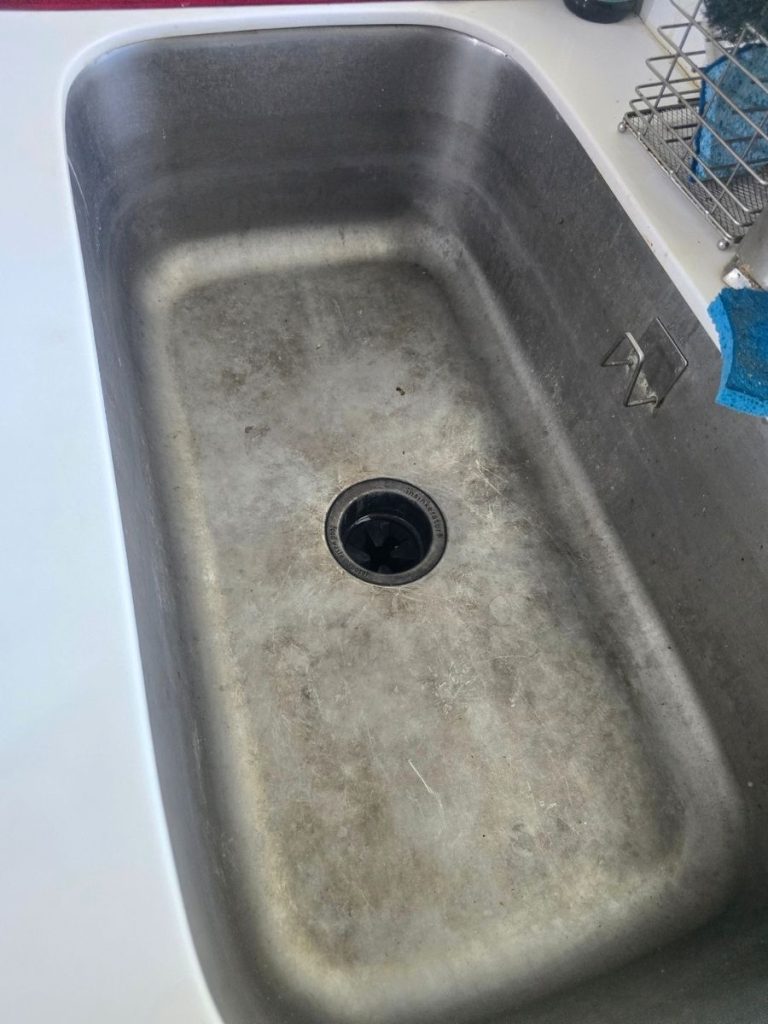
For my experiment, I used the scratchy side of the same damp, blue kitchen sponge on all four sections. I scrubbed each area with approximately the same effort to make the comparison as fair as possible.
Here’s how I divided the sink:
| Sink section | Cleaning method | Result |
|---|---|---|
| Top left | Dish soap and hot tap water | No noticeable improvement |
| Top right | White vinegar (5% acidity) | Slight bubbling, little improvement |
| Bottom left | Baking soda and dish soap | Removed some grime |
| Bottom right | Bar Keepers Friend | Removed all the stubborn buildup |
I photographed the sink before cleaning, after testing each section, and after cleaning the entire sink with the winning product.
This wasn’t a laboratory-controlled experiment. Each section had its own buildup, but the side-by-side results gave me a useful real-world comparison.
Method 1: Dish Soap and Hot Water
Dish soap and hot water are my usual cleaning method. They work well for removing grease, food residue, and everyday grime from my stainless steel kitchen sink.
For this test, I scrubbed the top-left section with dish soap and hot tap water.
The result? Absolutely nothing.
The stubborn stains looked pretty much the same afterward.
That didn’t surprise me entirely. After all, this is how I normally clean my sink, and those stains were still there!
Dish soap is a good choice for regular cleaning, but my sink needed something more for a thorough deep clean.
Method 2: Baking Soda and Dish Soap
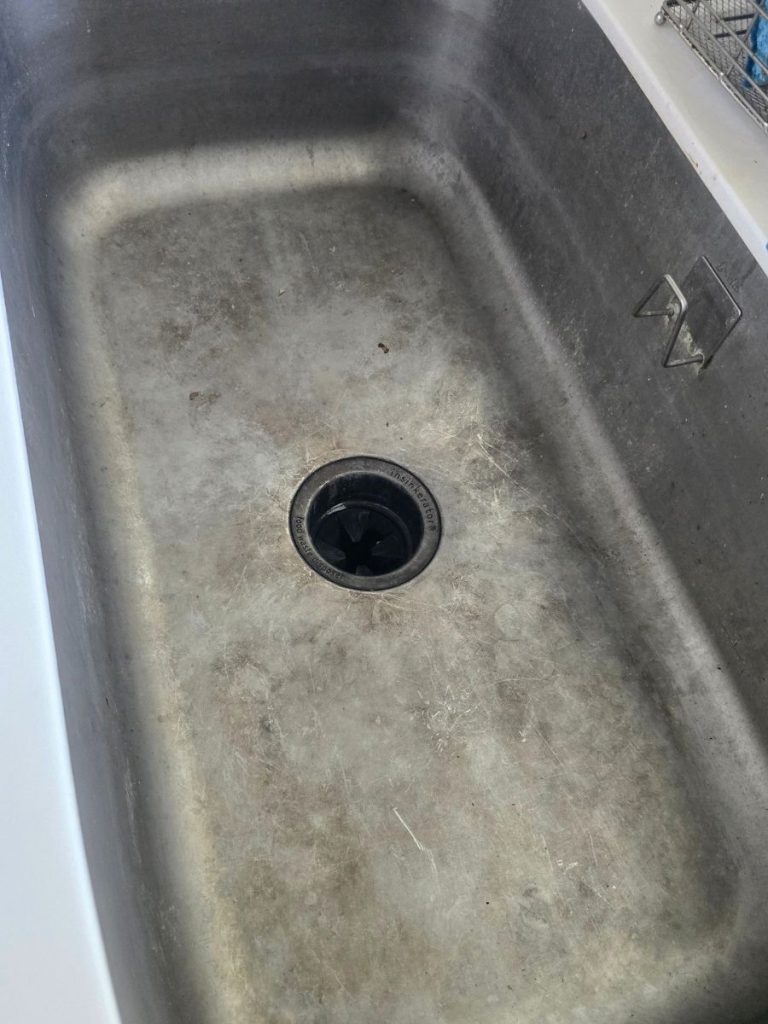
Next, I combined baking soda with dish soap and scrubbed the bottom-left section.
Baking soda is a mild abrasive that can help loosen stuck-on grime, while dish soap helps remove grease and residue.
The result? Some improvement.
This mixture removed some of the grime and worked noticeably better than dish soap alone. Unfortunately, plenty of staining remained.
Method 3: White Vinegar
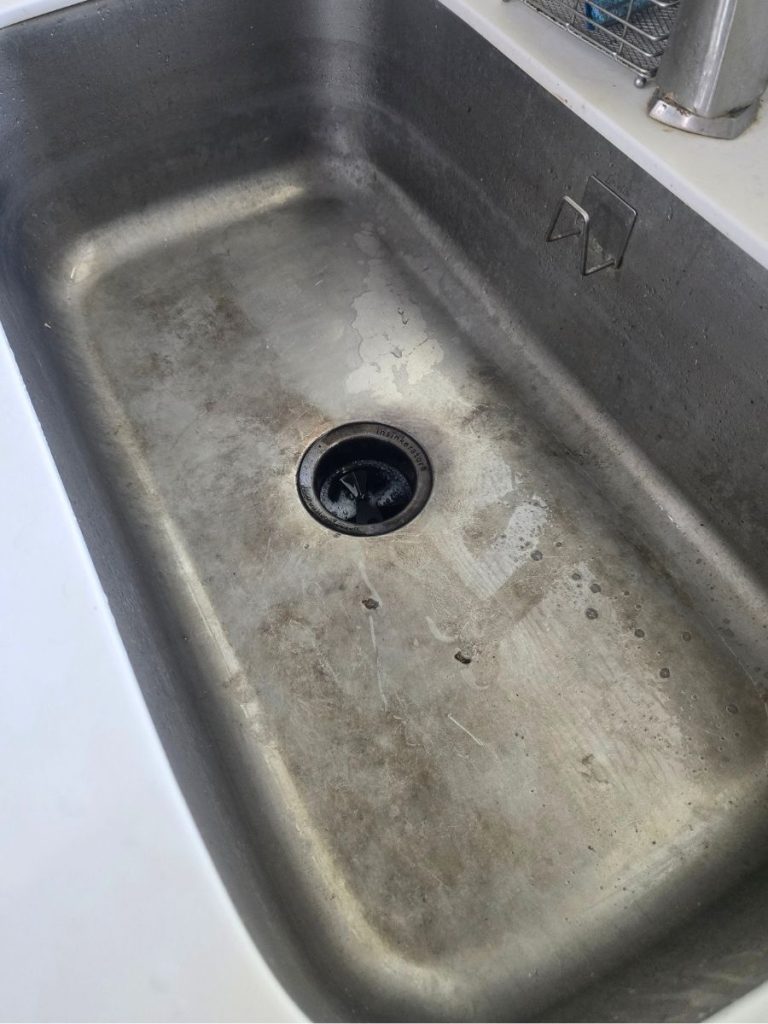
For the top-right section, I tested regular white distilled vinegar with 5% acidity in a spray bottle.
White vinegar is often recommended for hard water deposits because its acidity can dissolve certain minerals.
Here’s what surprised me: The vinegar actually bubbled a little when I applied it.
I wondered whether it was reacting with some of the mineral buildup from my iron-rich well water, although I couldn’t identify exactly what caused the bubbling.
The result? Very little improvement.
Despite the reaction and scrubbing, most of the stubborn stains remained.
I rinsed the vinegar away thoroughly. Never mix vinegar with bleach or other incompatible household cleaners.
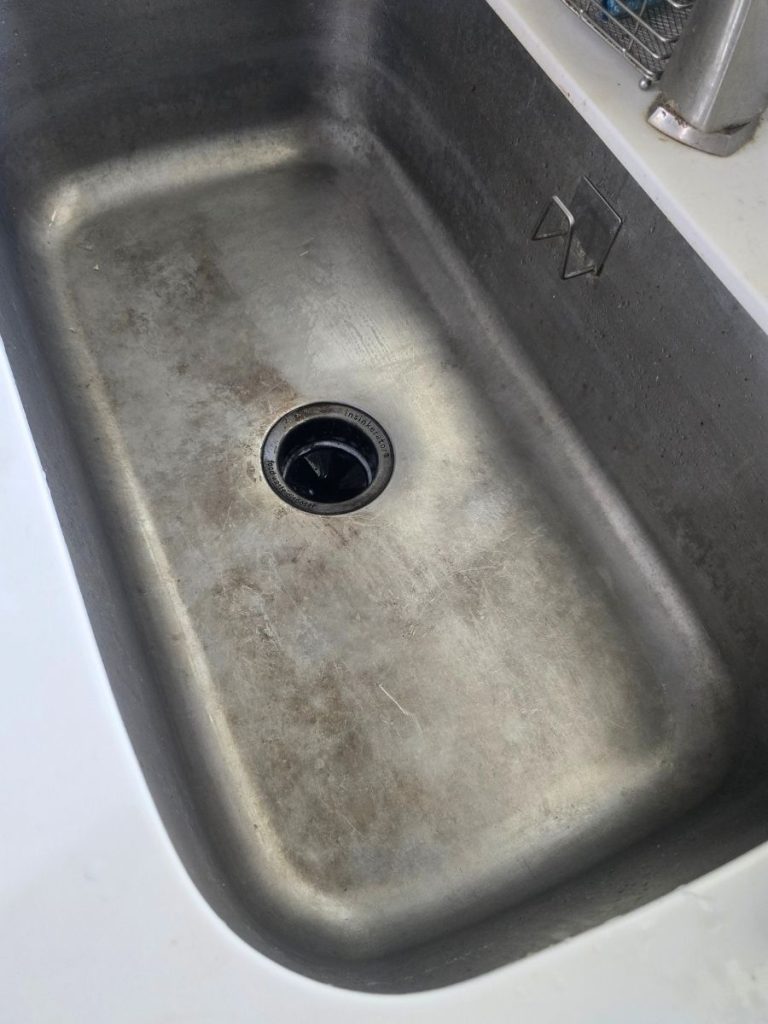
Method 4: Bar Keepers Friend
Finally, I tested Bar Keepers Friend on the bottom-right section.
Bar Keepers Friend contains oxalic acid and is formulated to tackle certain rust stains, mineral deposits, and stubborn discoloration on compatible surfaces, including many stainless steel sinks.
Using the same damp sponge and approximately the same scrubbing effort, I worked on the stained area.
The result? All the stubborn buildup came off!
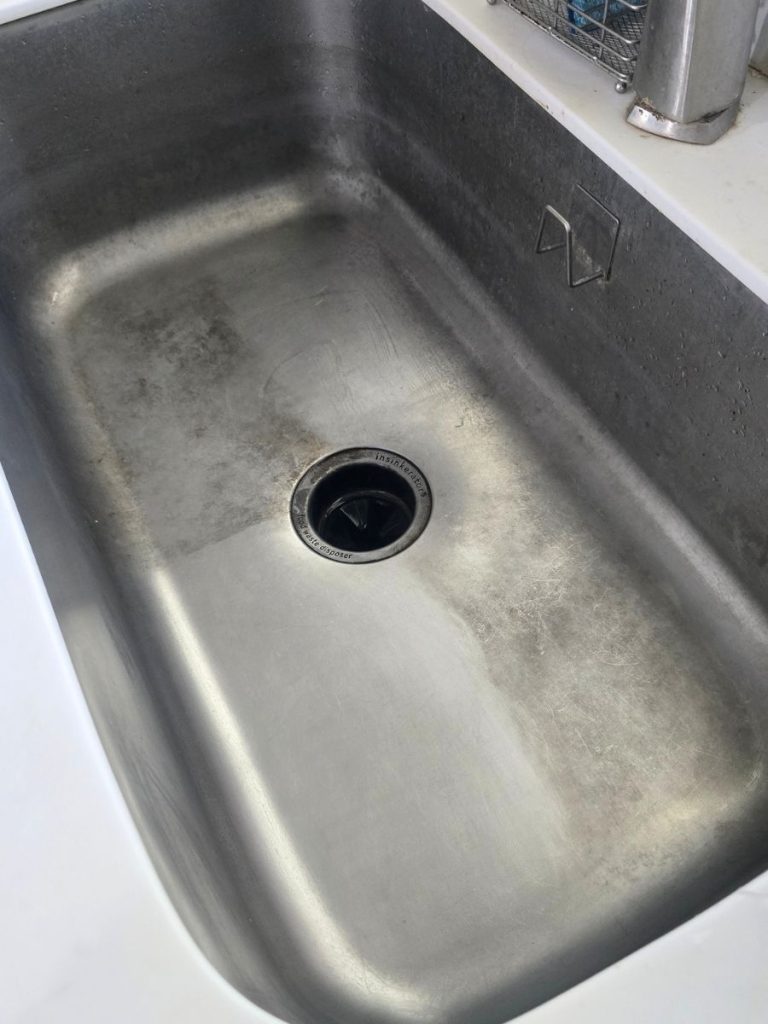
It wasn’t effortless. I still had to scrub, but this was the only cleaning product that completely removed the staining in my experiment.
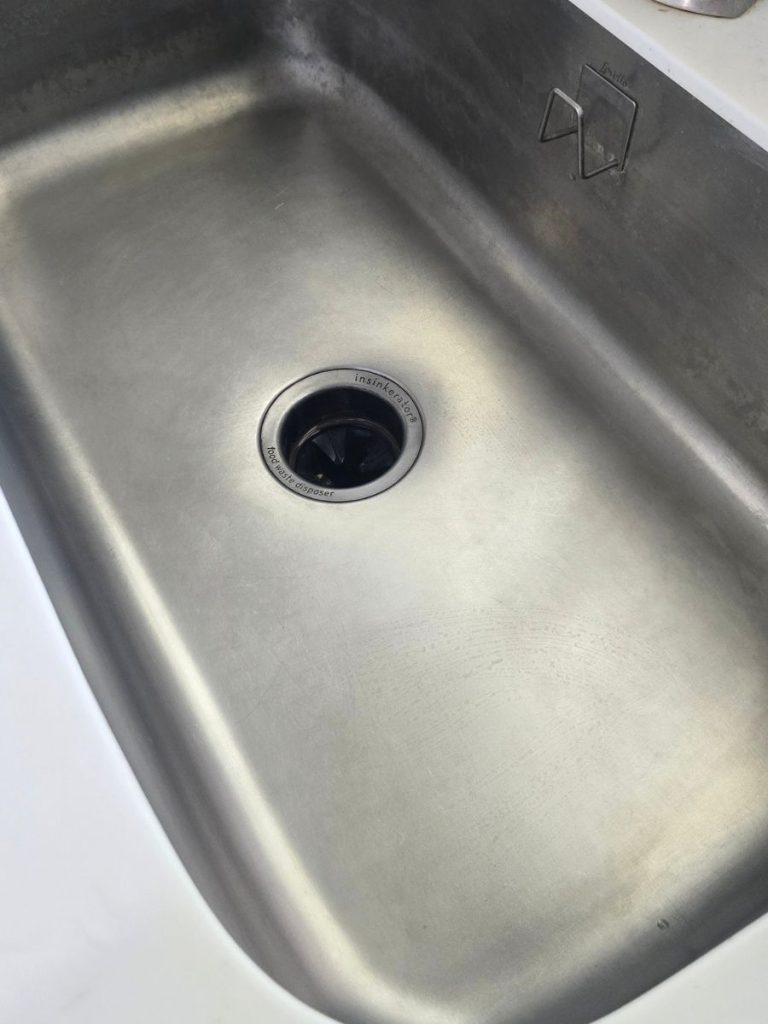
Once I saw the results, I used Bar Keepers Friend to clean the entire sink, following the product directions and rinsing thoroughly.
The finished sink looked so much better!
Which Cleaner Worked Best?
Bar Keepers Friend was the best way.
The biggest difference was that it removed the stubborn buildup my regular cleaning routine couldn’t handle.
That doesn’t mean everyone needs a specialty stainless steel cleaner for everyday washing. Dish soap and water are perfectly useful for ordinary grease and food residue.
But for the stubborn stains in my hard-water household, Bar Keepers Friend made the difference.
My before-and-after photos show just how much the appearance of my sink improved.
How to Clean a Stainless Steel Sink Without Damaging the Finish
I used the scratchy side of a kitchen sponge during my experiment, but abrasive scrubbers aren’t appropriate for every stainless steel finish. Check your sink manufacturer’s care instructions before using one.
For proper care and regular cleaning:
- Use a soft sponge or microfiber cloth. These are good cleaning tools for everyday grime.
- Follow the direction of the grain. On brushed stainless steel, clean in the direction of the grain to help minimize visible scratches.
- Rinse with clean water. Remove cleaning products completely to avoid leaving residue.
- Dry with a soft cloth. This helps reduce water spots and keeps the sink looking shiny.
- Avoid harsh chemicals. Chlorine bleach can damage stainless steel. Always follow the manufacturer’s directions when using specialty cleaners.
- Avoid steel wool pads. Steel wool can scratch the stainless steel surface and leave behind tiny metal particles that may rust. A soft sponge or microfiber cloth is a better choice for regular cleaning.
How to Prevent Hard Water Stains on a Stainless Steel Sink
With hard water, keeping a sink spotless can feel like a never-ending job.
When water droplets evaporate, they can leave hard water deposits behind. Regular cleaning and drying can help prevent those deposits from becoming stubborn stains and rust spots.
Now, am I going to dry my kitchen sink after every single use?
Probably not. I cook and wash my hands too much for that! But giving it a quick rinse and wipe when I’m finished in the kitchen is a reasonable habit to work toward.
I’m also going to try a more thorough weekly cleaning, using Bar Keepers Friend as a simple method for best results when mineral buildup starts to appear. My hope is that regular maintenance will preserve the appearance of my sink without requiring quite so much scrubbing during the next deep clean.
For households with iron-rich well water like mine, some recurring discoloration may be difficult to avoid without addressing the minerals in the water itself.
Final Thoughts
I regularly clean my stainless steel sink with dish soap and water, but this experiment showed me why occasional deep cleaning matters.
Of the four methods I tested, Bar Keepers Friend was the only one that completely removed the stubborn stains.
It still took some elbow grease, but the results were worth it.
And now that I know what works on my sink, hopefully I won’t let those mineral deposits get quite so stubborn again!
